Play 5
Game ManagementSequence Work to Maximise Finishing
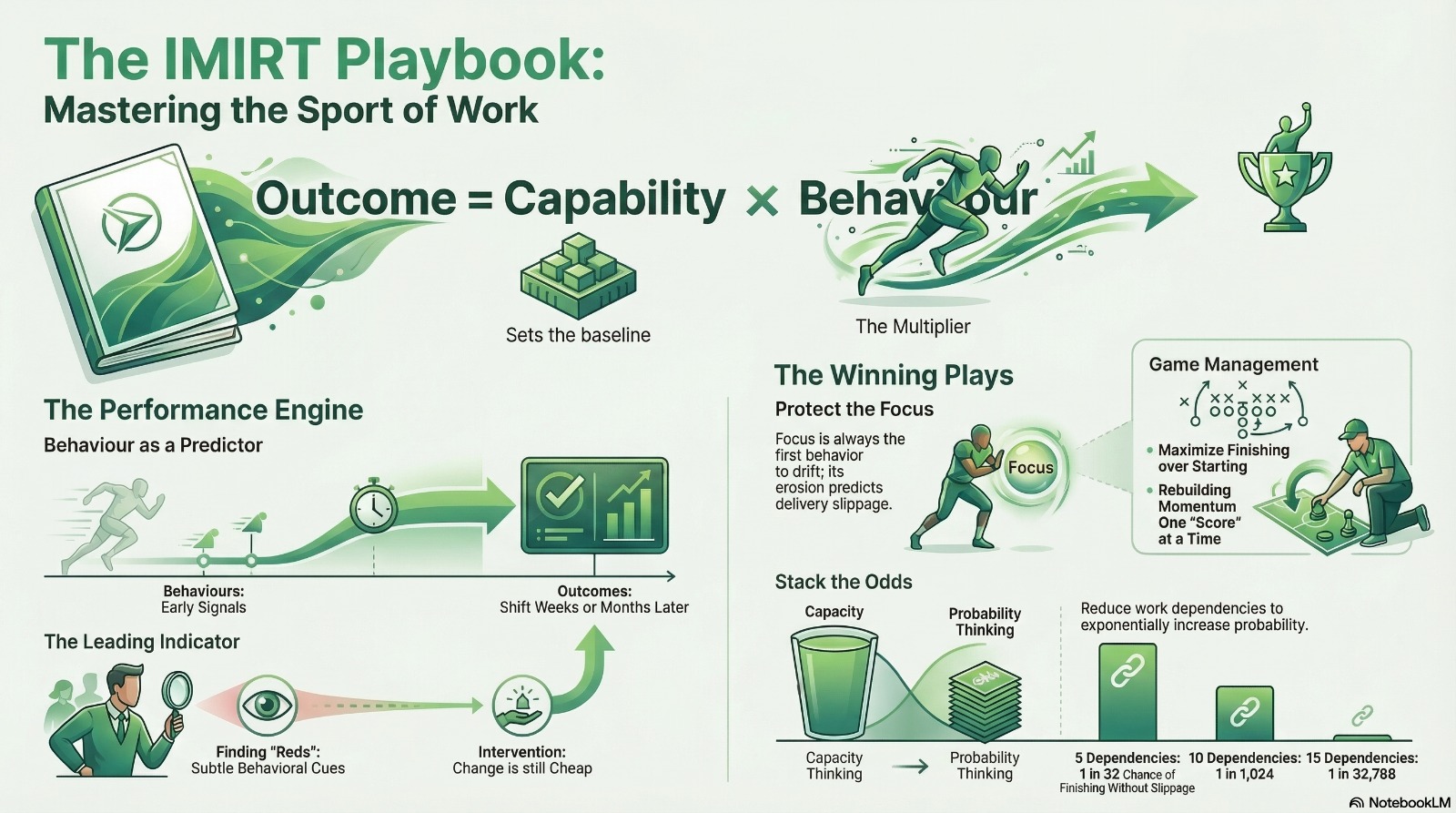
Momentum doesn't come from starting work. Momentum comes from finishing it. Game Management is the behavioural discipline of sequencing, protecting rhythm, and restoring flow.
The Problem
Momentum doesn't come from starting work. Momentum comes from finishing it. Teams forget this under pressure. They chase urgency, respond to noise, and push work forward because it feels productive. But starting more work doesn't create progress — it creates fragility. The scoring zone becomes crowded, dependencies pile up, and finishing odds collapse. High-performing teams don't let the game dictate the sequence. They manage the game.
Symptoms include
- Flooding the scoring zone with too many items
- Pushing work forward before it's strengthened
- Treating all work as equally urgent
- Allowing dependencies to dictate the sequence
- Confusing motion with progress
- Avoiding the uncomfortable decision of "not now"
Why this play matters
Every finished item increases confidence, reduces cognitive load, and frees capacity. Every unfinished item drains attention, increases risk, and compounds fragility. Teams that finish consistently move with clarity. Teams that start endlessly move with noise. The order in which work moves determines how much risk the team absorbs, how much momentum they generate, how predictable delivery becomes, how confident stakeholders feel, and how much pressure the scoring zone can handle. Poor sequencing creates fragility. Good sequencing creates flow.
Sports analogy
Control the Tempo
Elite teams don't let the game dictate the tempo. They control it. They slow the game when it's chaotic. They accelerate when the odds are in their favour. They sequence plays to maximise finishing.
Work is no different. Teams that control the tempo finish more, drift less, and operate with confidence.
Once a team understands finishing odds (Play 4), sequencing becomes unavoidable. Not all work is equal. Not all work is ready. Not all work deserves to be in play.
Business application
How to run it in delivery
Game Management shifts the team from reacting to urgency to sequencing with intent; from pushing everything forward to finishing the right things first; from carrying too much to carrying what the team can actually finish; from hoping for progress to engineering momentum.
Six behaviours make this real: (1) Start with finishing odds — high-probability items move first; low-probability items wait until strengthened. (2) Protect the scoring zone — only work with strong finishing odds enters the zone; everything else stays upstream or in midfield. (3) Sequence for flow, not fairness — work is ordered by probability and impact, not by who shouted loudest. (4) Reduce concurrency — fewer items in play means more items finished and more momentum. (5) Strengthen before moving — if an item is fragile, it doesn't advance; it gets strengthened. (6) Make sequencing a team decision — when the team owns the sequence, they own the outcome.
This is how teams move from chaos to clarity. Game Management turns finishing into a habit, not a heroic act.
Guided exercise
Manage the Game
Start by visualising the workflow as a Work Pitch and placing current work items across it. The rest of the exercise walks you through the six behaviours — starting with finishing odds, protecting the scoring zone, sequencing for flow not fairness, reducing concurrency, strengthening before moving, and making sequencing a team decision.
The remaining 5 steps of Manage the Game live in the full playbook — along with the templates, examples, and the follow-up behaviours that make the play stick.
Tease and gate
Get the complete Game Management play with all 6 guided steps.
Expected outcomes
Teams that run this play report
- Fewer items stuck in the scoring zone
- Cleaner, faster finishing
- Stronger delivery rhythm
- More predictable outcomes
- Reduced stress and reactivity
- Higher trust from stakeholders
FAQ
Common questions
- Why does sequencing matter so much?
- The order in which work moves determines risk absorbed, momentum generated, delivery predictability, stakeholder confidence, and how much pressure the scoring zone can handle. Poor sequencing creates fragility. Good sequencing creates flow. It is not a planning decision — it is a behavioural one.
- What does "finishing creates momentum" actually mean?
- Every finished item increases confidence, reduces cognitive load, and frees capacity. Every unfinished item drains attention, increases risk, and compounds fragility. Momentum is the compounding effect of finishing, not the excitement of starting.
- How do we protect the scoring zone in practice?
- Only work with strong finishing odds enters the zone. Anything fragile stays upstream or in midfield until it is strengthened — the problem clarified, dependencies reduced, decisions stabilised. The zone is a privilege, not a destination.
- Is this the same as reducing WIP limits?
- Reducing concurrency is one of the six Game Management behaviours, so yes — but it is not the whole play. Sequencing for flow, protecting the scoring zone, and strengthening before moving are what make reduced WIP actually deliver outcomes.
Problems this play solves
Run the plays
Run Game Management with the full IMIRT Playbook.
Five plays, five guided exercises, one free PDF.